
"coffee inspection"
3000 article(s) found

Lishui imports prepackaged coffee for the first time
On May 2, the imported prepackaged coffee accepted by Lishui Inspection and Quarantine Bureau for the first time has successfully entered the market, with a total of 723 cases and 1013.6 kilograms. The imported prepackaged coffee comes from Italy, a world-famous coffee country, including cappuccino, latte capsules, Arabica barreled coffee beans and other 12 varieties.

Ethiopian Coffee Flavor introduces the characteristics of Ethiopian Coffee
35% of the coffee is courtyard coffee. In this kind of coffee garden, the planting is three-dimensional. Coffee is located in the lower layer and gets a suitable growth environment in the shade of other crops. Fertilizers are mainly fallen leaves, withered grass and animal manure. 5% of the coffee belongs to plantation coffee. This is a modern way of growing coffee, which is also grown in forests, but uses new varieties and works with others.

Characteristics of flavor and taste quality of sun Xidama coffee beans introduction of manor treatment methods in producing areas
Characteristics of flavor and taste quality of sunburn Sidama coffee beans in producing areas the grading and quality control system of coffee in Ethiopia is divided into three levels: producer, regional and national. All coffee is inspected by local inspection agencies before leaving the country of origin, and then re-tested at the coffee inspection and grading centers in Addis and Diredawa to determine its quality grade.

Introduction to the characteristics of Ethiopian boutique coffee bean flavor and taste manor with suitable acidity
In Ethiopia, the grading and quality control system of coffee is divided into three levels: producer, regional and national. All coffee is inspected by local inspection agencies before leaving the country of origin, and then re-tested at the coffee inspection and grading centers in Addis and Diredawa to determine its quality grade. Coffee is graded before auction and sale, for all involved in production, acquisition,

Introduction to the unique flavor description and taste characteristics of the Yega Shiffiwaka coffee producing area
In Ethiopia, the grading and quality control system of coffee is divided into three levels: producer, regional and national. All coffee is inspected by local inspection agencies before leaving the country of origin, and then re-tested at the coffee inspection and grading centers in Addis and Diredawa to determine its quality grade. Coffee is graded before auction and sale, for all involved in production, acquisition,

China's legal Industry Policy on imported Coffee-the amount of Coffee imported by China per year
China's legal and industry policy on coffee import-the main functions of China's annual coffee import quantity importers association include: to obtain the understanding and support of the government, media and the public for China's coffee import as much as possible through overall publicity; to guide enterprises engaged in coffee import to abide by the relevant laws and regulations of the state; to help enterprises and relevant units solve the problems encountered in the process of import trade
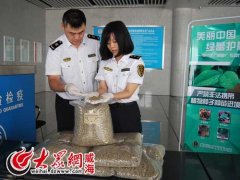
Can raw coffee beans sprout? Passengers carrying 60 kilograms of raw coffee beans into the country were returned.
Can raw coffee beans sprout? Passengers carrying 60 kilograms of raw coffee beans into the country were returned to professional baristas for communication. Recently, staff of Shandong Weihai entry-exit Inspection and Quarantine Bureau found that a passenger from Incheon, South Korea, attempted to bring large quantities of raw coffee beans into the country illegally during quarantine inspection at the seaport port. According to investigation, the batch

Imports of tea and coffee surged in Tianjin Port in the first half of the year.
Follow Ka Ping (Wechat official account vdailycom) found that Beautiful Cafe opened its own shop and learned from the Tianjin Inspection and Quarantine Bureau that in the first half of 2017, a total of 800.14 tons of tea were inspected and quarantined by the bureau, with a value of US $2.744 million, with a significant increase in import volume. Imported coffee was 1530.3 tons, with a value of US $4.849 million, and the import volume tripled compared with the same period last year.

More varieties of coffee have been eaten. Lishui imported prepackaged coffee for the first time.
On May 2, the imported prepackaged coffee accepted by Lishui Inspection and Quarantine Bureau for the first time has successfully entered the market, totaling 723 cases and 1013.6 kilograms. The prepackaged coffee imported this time comes from Italy, a world-famous coffee country, including cappuccino, latte coffee capsules, Arabica barreled coffee beans and other 12 varieties.

What is the market situation of Brazilian coffee beans? what are the varieties of Brazilian coffee beans?
Follow the comments (Wechat official account vdailycom) found that the coffee shop opened a small shop in Brazil. How are Brazilian coffee beans going? Brazilian Agriculture Minister Blairo Maggi said on Monday that the Brazilian government plans to allow Robusta coffee beans to be imported from Vietnam. Brazilian instant coffee producers have been lobbying on the issue for months. Tuesday (February 21), Saint Eyre

Introduction to the characteristics of Ethiopian Coffee Flavor Manor with acidity and texture
5% of the coffee belongs to plantation coffee. This is a modern way of growing. Coffee is also grown in a forest, but new varieties are used and planted in rows with other shade trees. Due to different processing methods, coffee can be divided into washed coffee (Washed coffee) and sun-cured coffee (Sun-dried coffee). Washed coffee accounts for 35% of exports. Of good quality

Ethiopian coffee producing area introduces fine coffee Yega Xuefei and Sidamo water washing and sun treatment.
Ethiopia is one of the major producers of Arabica coffee in Africa, producing the best Arabica coffee in the world. It is said that coffee was first discovered by shepherds in Essekafa, and the name of coffee evolved from Kafa, so Ethiopia is still coffee. Ethiopia is an African Arab coffee.

Manual inspection of raw coffee beans in Coffee Encyclopedia
With reference to the origin and grading, grab the raw beans with your hands and check their appearance. The feeling of the hand is very important. Judging from the appearance of raw beans, their quality must have some experience, at the same time, it is difficult to set standards. The color has no difference in uniform light green, with luster. Also take into account the changes in color after harvest. The shape requires uniform and neat particles, and there should be no deformed beans.
Manual inspection of high-quality coffee beans
With reference to the origin and grading, grab the raw beans with your hands and check their appearance. The feeling of the hand is very important. Judging from the appearance of raw beans, their quality must have some experience, at the same time, it is difficult to set standards. The color has no difference in uniform light green, with luster. Also take into account the changes in color after harvest. The shape requires uniform and neat particles, and there should be no deformed beans.
Manual inspection of high-quality raw coffee beans
With reference to the origin and grading, grab the raw beans with your hands and check their appearance. The feeling of the hand is very important. Judging from the appearance of raw beans, their quality must have some experience, at the same time, it is difficult to set standards. The color has no difference in uniform light green, with luster. Also take into account the changes in color after harvest. The shape requires uniform and neat particles, and there should be no deformed beans.
Manual inspection of raw coffee beans
With reference to the origin and grading, grab the raw beans with your hands and check their appearance. The feeling of the hand is very important. Judging from the appearance of raw beans, their quality must have some experience, at the same time, it is difficult to set standards. The color has no difference in uniform light green, with luster. Also take into account the changes in color after harvest. The shape requires uniform and neat particles, and there should be no deformed beans.

Representatives of Starbucks Coffee Co., Ltd. visited Weiyang District.
On the morning of March 30, responsible persons of Chengdu Starbucks Coffee Co., Ltd. and Xi'an Starbucks Coffee Co., Ltd. visited Weiyang District at the gracious invitation of District leaders and District Economic and Trade Bureau. The Starbucks inspection team listened to Liu Lei, deputy director of the District Economic and Trade Bureau, introduced the development of the business district in Weiyang District, and visited Sheng Longguang on the spot.

MANNER apologized! In response to the Shanghai store has been closed for rectification, and will carry out self-inspection!
Many people will be happy to return to work and production. Isolated at home for many days, it is not easy to get coffee freedom, and it is very lucky to have a coffee shop that is open near home and can take out. However, MANNER Coffee (Shanghai Wujiang Road store) is the market in Jing'an District.
The first national coffee product professional testing laboratory set up in Pu'er
AQSIQ approved the establishment of the National Coffee testing key Laboratory (Pu'er) on December 2 through careful examination and acceptance. So far, the only national coffee product professional testing laboratory was born in Pu'er. For a long time, since coffee products have no industry standards, no ministerial standards, and no national standards, the trading parties only rely on samples and purchases.

Introduction to the characteristics of the flavor description method of Ethiopian Sidamomo Lion King Coffee
Coffee is Ethiopia's most important export cash crop and the main source of Ethiopia's foreign exchange earnings. Ethiopia's coffee exports account for about 3% of the world market, making it the eighth largest coffee exporter in the world. Coffee exports increased steadily from 58000 tons in 1990 to 110000 tons in 1995-96, and remained at this level in the following years.